

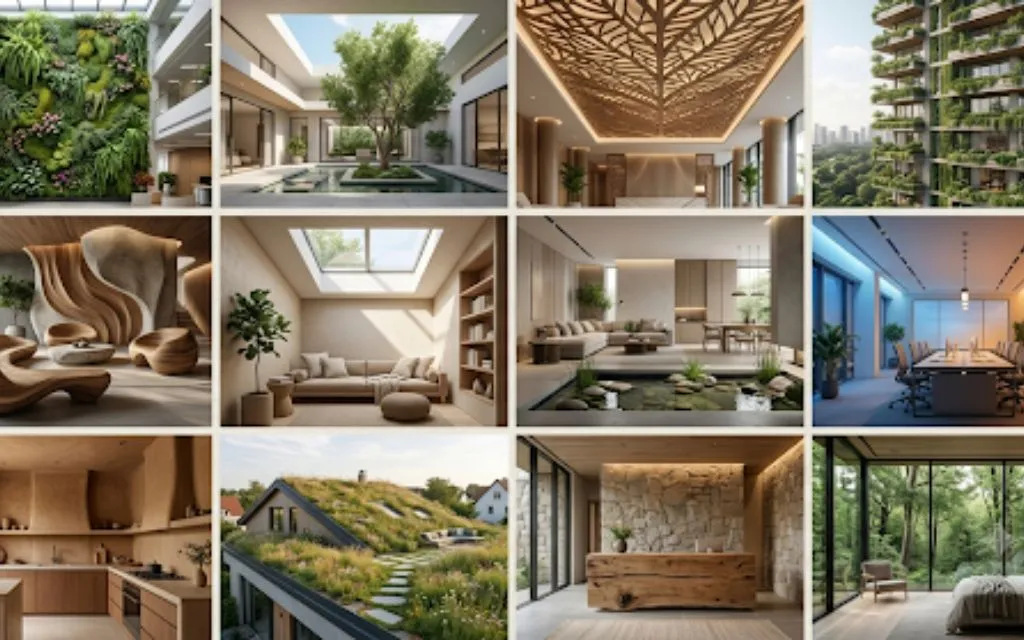

The biggest biophilic design trends 2026 are moving beyond simply adding houseplants to a room. Modern biophilic spaces increasingly combine natural light, living greenery, natural materials, organic shapes, multisensory experiences, indoor-outdoor connections, wellness spaces, biodiversity, climate-responsive strategies, and regenerative design. Current Houzz data also shows strong consumer interest, with searches for “biophilic design” rising 112% year over year in the United States during January to March 2026.
- Biophilic Design Trends 2026 at a Glance
- What Is Biophilic Design in 2026?
- Why Is Biophilic Design Trending in 2026?
- 12 Biophilic Design Trends Defining 2026
- The Science Behind Biophilic Design
- Biophilic Design for Different Spaces
- Best Materials and Natural Elements for 2026
- Biophilic Color Trends for 2026
- How to Add Biophilic Design Without a Major Renovation
- Common Biophilic Design Mistakes
- Biophilic Design vs Sustainable Design vs Regenerative Design
- What Is Next for Biophilic Design?
- Frequently Asked Questions
- Key Takeaways
- Conclusion
Biophilic Design Trends 2026 at a Glance
| Trend | What It Means | Main Purpose |
| Integrated greenery | Plants become part of the architecture | Stronger nature connection |
| Living walls | Vertical gardens become design features | Visual and sensory impact |
| Natural light | Daylight becomes a central design element | Comfort and wellbeing |
| Multisensory design | Sight, sound, touch and scent work together | Deeper nature experience |
| Natural materials | Wood, stone, clay, cork and fibers | Warmth and tactile connection |
| Organic forms | Curves and nature-inspired geometry | Softer visual experience |
| Distributed greenery | Nature appears throughout a space | More consistent exposure |
| Wellness spaces | Restorative rooms connect with nature | Relaxation and recovery |
| Climate-responsive biophilia | Design responds to local climate | Comfort and resilience |
| Biodiversity | Native plants and ecological value | Stronger environmental connection |
| Regenerative design | Spaces aim to support natural systems | Long-term ecological value |
| Smart biophilia | Technology supports natural experiences | Adaptive comfort |
What Is Biophilic Design in 2026?
Biophilic design is an approach to architecture and interior design that strengthens the relationship between people and the natural world. It can include direct natural elements such as plants, water, daylight and outdoor views, as well as indirect references such as natural materials, organic shapes, textures, patterns and nature-inspired colors.
The idea is connected with the concept of biophilia, which became widely known through biologist E.O. Wilson and his work on the human tendency to seek connections with nature.
In 2026, the definition is becoming broader. Biophilic design is no longer limited to putting a few plants beside a sofa or adding a wooden table to a room. Designers are increasingly considering nature during the planning stage of a building or interior.
This means that window placement, daylight, ventilation, views, spatial layout, materials, acoustics, planting, outdoor connections and even maintenance can become part of the biophilic strategy.
A 2026 scoping review of 136 studies examined seven major categories of indoor biophilic interventions, including green walls, indoor plants, window views, natural light, natural materials, water features and nature-inspired visual references. The research also found that factors such as greenery coverage, scale, placement and sensory richness can influence human responses.
That evidence helps explain the biggest change in 2026, biophilia is becoming an integrated design strategy rather than a decorative theme.
Why Is Biophilic Design Trending in 2026?
The popularity of biophilic design is closely connected with several larger movements in housing, architecture and wellness.
One of the clearest indicators comes from Houzz. Its 2026 U.S. Emerging Summer Trends Report found that searches for “biophilic design” increased 112% year over year based on searches from January through March 2026 compared with the same period in 2025. Searches for “wellness room” increased 164%, while “calming” rose 139%.
This shows that biophilic design is becoming part of a wider desire for homes that feel restorative rather than purely decorative.
Sustainability is another major factor. Houzz also reported major increases in searches connected with solar energy, repurposed materials, low-voltage lighting, permeable patios, native landscapes and bamboo flooring.
At the professional level, research is also expanding. A 2026 systematic literature review analyzed 76 academic publications from 47 peer-reviewed journals, showing that biophilic design has developed into a substantial research field rather than a short-lived interior trend.
Also Read: How Mira Home Pest Control Is Building Healthier Living Spaces
12 Biophilic Design Trends Defining 2026
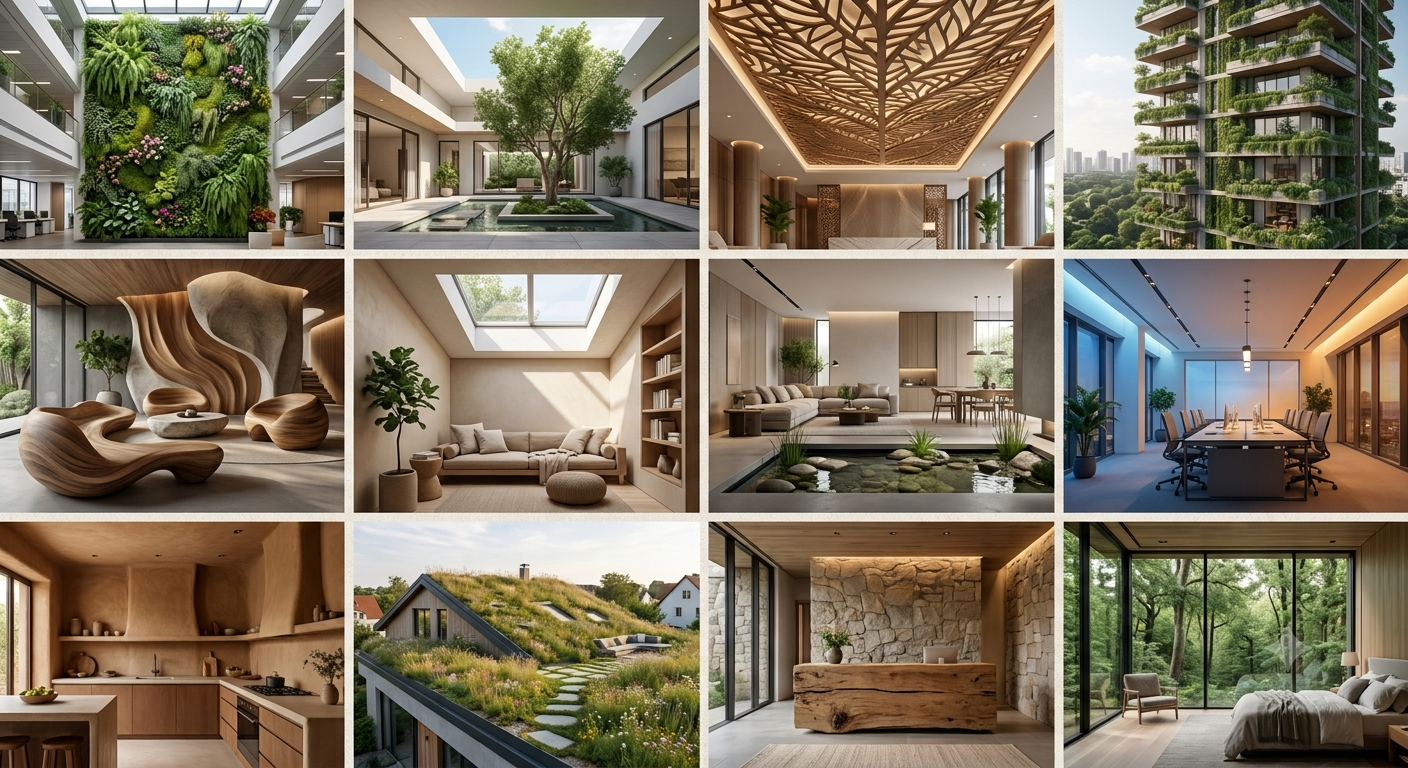
1. Biophilia Moves From Decoration to Architecture
The most important shift in biophilic design trends 2026 is the movement from decoration toward architecture.
Previously, a designer might complete a room and then add plants as the final step. The newer approach considers natural elements much earlier.
Windows may be positioned to frame trees or gardens. Courtyards can become central parts of a floor plan. Indoor planting can be integrated into partitions. Natural materials can be specified alongside lighting and acoustic systems rather than added only for visual appeal.
This approach creates a stronger relationship between people and nature because natural elements influence the structure and experience of the space.
The result is more meaningful than a room that simply has a green wall.
2. Living Walls Become Architectural Features
Living walls remain one of the most recognizable biophilic design features in 2026, but their role is changing.
A vertical garden is increasingly being used as a room divider, lobby feature, circulation element or architectural focal point rather than a decorative panel.
In offices, hotels, restaurants and large homes, living walls can create visual separation while introducing greenery into areas that may not have direct access to gardens.
However, a living wall is not maintenance-free decoration. A functioning system may require irrigation, drainage, suitable lighting, plant selection and regular maintenance.
This practical side is important because a poorly planned green wall can become expensive to maintain.
The 2026 trend is therefore not simply “more living walls.” It has better-planned living walls.
3. Natural Light Becomes a Core Design Element
Natural light is one of the strongest connections between architecture and the outdoor environment.
Large windows, skylights, clerestory windows, glass doors and carefully positioned openings can bring daylight deeper into a building while creating visual connections with the outside.
Biophilic design increasingly considers daylight quality rather than simply maximizing the amount of glass.
Soft, diffuse light, changing daylight patterns and views of natural elements can create a more dynamic environment throughout the day.
This also connects biophilic interiors with circadian lighting. Artificial lighting systems can be designed to complement natural daylight patterns, particularly in spaces where outdoor light is limited.
The objective is not to make every room extremely bright. The objective is to create a more natural rhythm of light and shadow.
4. Multisensory Biophilic Interiors
One of the most important developments in 2026 is the move from visual biophilia toward multisensory biophilia.
A conventional nature-inspired room may look natural but still feel artificial.
A multisensory environment can combine:
- The visual presence of plants
- The texture of real wood and stone
- Natural daylight
- Gentle water sounds
- Natural ventilation
- Soft textiles
- Subtle natural scents
- Comfortable temperature and airflow
This approach creates a deeper sensory relationship with nature.
The 2026 research literature increasingly highlights sensory richness and the combination of multiple interventions rather than relying on one isolated design feature.
5. Warm Natural Materials Replace Cold Minimalism
Biophilic interiors are increasingly using materials that communicate warmth, texture and natural variation.
Popular choices include:
- Natural wood
- Reclaimed timber
- Stone
- Clay
- Terracotta
- Cork
- Bamboo
- Rattan
- Linen
- Wool
- Natural plaster
- Other bio-based materials
The goal is not to make every surface look rustic.
Modern biophilic interiors can combine clean architectural lines with natural imperfections. A contemporary apartment with oak, stone, linen and soft greenery can remain highly modern while still creating a stronger connection with nature.
This material direction also fits the broader 2026 movement toward tactile and sensory-rich interiors identified by Houzz.
6. Organic Forms and Biomorphic Design
Straight lines and rigid geometry are increasingly being balanced with curves and organic forms.
Rounded furniture, arched openings, wave-like details, irregular stone shapes and flowing partitions can reference patterns found in natural environments.
Houzz’s 2026 research also identified strong momentum around curves and soft geometry, including major increases in searches for scalloped and wave-inspired tile.
Biomorphic design can be subtle. A curved sofa, organic mirror or rounded doorway may provide enough visual softness without turning the room into an obvious nature-themed interior.
7. Greenery Becomes Distributed Instead of Concentrated
A single dramatic plant wall may create a strong first impression, but distributed greenery can create repeated contact with nature.
Instead of placing all plants in one corner, designers can distribute them through:
- Living rooms
- Work areas
- Hallways
- Waiting areas
- Kitchens
- Bedrooms
- Shared spaces
- Meeting rooms
This is particularly relevant to workplace design.
A reception area filled with plants may look impressive to visitors, but employees benefit more when natural elements are visible throughout the areas where they actually spend time.
The idea is simple: nature should be encountered repeatedly, not only photographed once.
8. Plants and Greenery Support Acoustic Design
Biophilic design is also beginning to overlap with acoustic comfort.
Planting, moss systems, green walls and natural textured surfaces can contribute to visual separation and may help manage sound in certain interior configurations.
This is particularly relevant to open-plan offices where noise and lack of privacy can affect comfort.
The stronger approach is to treat greenery as part of a broader acoustic strategy rather than claiming that plants alone can solve noise problems.
Acoustic panels, spatial zoning, soft furnishings and appropriate architectural materials may still be necessary.
9. Wellness Rooms Become Biophilic Retreats
The growing wellness movement is closely connected with biophilic interiors.
Houzz reported a 164% increase in searches for “wellness room” in its 2026 U.S. search analysis, along with increases for calming spaces, sensory rooms and yoga rooms.
A biophilic wellness room might include:
- Natural daylight
- Indoor plants
- Outdoor views
- Soft natural materials
- Warm colors
- Comfortable seating
- Quiet acoustics
- Natural ventilation
- Organic shapes
- Low visual clutter
The purpose is not to create a luxury spa in every home. Even a small reading corner beside a window with plants and natural materials can create a restorative micro-space.
10. Climate-Responsive Biophilic Design
This is one of the most important and under-covered 2026 developments.
Biophilic design should not look identical in every climate.
A strategy that works in a humid tropical environment may be unsuitable in a hot-arid region where water is scarce.
A 2026 study on hot-arid climates specifically argues for approaches centered on passive cooling, water neutrality and native vegetation, while also considering local cultural values.
This means biophilic design can include:
- Shading
- Courtyards
- Native planting
- Passive cooling
- Cross-ventilation
- Water-conscious landscaping
- Thermal mass
- Locally appropriate materials
- Climate-specific vegetation
This is a major step forward because it prevents biophilic design from becoming a copy-and-paste aesthetic.
11. Biodiversity and Regenerative Design Gain Importance
Sustainable design generally aims to reduce environmental harm.
Regenerative design goes further by asking whether the built environment can contribute positively to ecological systems.
This can involve:
- Native plants
- Habitat creation
- Biodiversity
- Rainwater management
- Soil health
- Local ecological systems
- Circular materials
- Renewable energy
- Landscape restoration
A 2026 review describes biophilic design as increasingly connected with ecological resilience, climate-responsive architecture, biodiversity and nature-based solutions.
Recent research also emphasizes the need to distinguish regenerative design from related concepts such as sustainable, ecological, restorative and biophilic design.
This makes regenerative biophilia one of the strongest forward-looking topics for 2026 and beyond.
12. Smart Technology Supports Biophilic Experiences
Technology and biophilic design may appear contradictory, but they can work together.
Smart systems can support natural experiences through:
- Automated blinds
- Daylight sensors
- Circadian lighting
- Smart ventilation
- Irrigation controls
- Indoor environmental monitoring
- Temperature management
- Plant-care systems
Artificial intelligence is also beginning to enter biophilic design research. Current studies are examining AI-assisted approaches for evaluating and generating nature-integrated interior environments.
The important distinction is that technology should support the connection with nature rather than replace it.
A digital image of a forest is not equivalent to a real garden view.
The Science Behind Biophilic Design
The popularity of biophilic design is partly driven by growing research into how built environments affect human wellbeing.
A 2026 scoping review examined 136 studies covering green walls, indoor plants, window views, natural light, natural materials, water features and nature-inspired visual references. The researchers also highlighted greenery coverage, scale, placement and sensory richness as important design properties.
Another 2026 systematic review examined 76 academic publications from 47 peer-reviewed journals, showing the breadth of current research in the field.
The evidence should still be interpreted carefully. Biophilic design is not a universal medical treatment, and individual interventions can produce different outcomes depending on context.
The strongest conclusion is that well-designed contact with nature can contribute to restorative, comfortable and psychologically supportive environments, especially when multiple appropriate interventions work together.
Biophilic Design for Different Spaces
Biophilic Homes
Residential biophilic design can focus on daylight, indoor plants, outdoor views, natural materials, ventilation and comfortable spaces for rest.
Small homes do not require expensive green walls. A well-positioned window, natural wood furniture, a few healthy plants and a balcony garden can create meaningful nature connections.
Biophilic Offices
Office design can use distributed greenery, natural light, outdoor views, acoustic zoning and restorative break areas.
The objective should be to improve everyday experience rather than create a decorative reception area that employees rarely use.
Healthcare Spaces
Healthcare environments can benefit from daylight, gardens, outdoor views, natural materials and quieter sensory conditions.
The design should also consider hygiene, maintenance, accessibility and infection-control requirements.
Hotels and Hospitality
Hotels can integrate courtyards, natural materials, indoor planting, water elements, local landscape references and outdoor rooms.
Biophilic hospitality design can also strengthen a property’s connection with local culture and landscape.
Schools and Universities
Educational environments can use daylight, gardens, natural materials, outdoor learning spaces and views of vegetation.
The goal is to make learning environments feel comfortable, stimulating and connected to the surrounding environment.
Best Materials and Natural Elements for 2026
The most useful biophilic materials are not necessarily the most expensive.
Wood
Oak, walnut, bamboo and reclaimed timber can provide natural grain, warmth and tactile variation.
Stone
Stone can add geological texture and visual permanence.
Clay and Terracotta
These materials introduce earthy color and irregular natural texture.
Cork
Cork provides a warm tactile surface and can also contribute to acoustic strategies.
Natural Fibers
Linen, wool, jute and rattan can introduce softness and visible texture.
Plants
Plant selection should consider light, humidity, maintenance, allergies, safety and local suitability rather than simply choosing fashionable species.
Water
Water can contribute movement and sound, but water use should be appropriate for the local climate and maintenance capacity.
Biophilic Color Trends for 2026
Biophilic color palettes are becoming warmer and more complex.
Popular directions include:
- Sage green
- Olive green
- Forest green
- Terracotta
- Clay
- Sand
- Warm beige
- Earthy brown
- Muted blue
- Natural wood tones
The strongest approach is not to cover an entire room in green.
Instead, designers can combine earthy colors with natural materials and greenery so that the palette feels connected to a particular landscape.
A desert-inspired interior, for example, may rely on sand, clay, warm stone and muted vegetation rather than tropical green.
How to Add Biophilic Design Without a Major Renovation
Biophilic design does not have to require a large construction budget.
A practical approach can begin with the following:
- Increase access to daylight where possible.
- Remove unnecessary visual barriers around windows.
- Add healthy plants suitable for the available conditions.
- Introduce natural wood or stone through furniture and accessories.
- Use linen, wool, jute or other tactile natural fabrics.
- Add curved or organic forms.
- Create a small indoor-outdoor connection through a balcony, patio or window view.
- Use warm layered lighting.
- Reduce unnecessary visual clutter.
- Create one dedicated restorative area.
The most important principle is quality over quantity.
A room does not become more biophilic simply because it contains more plants.
Common Biophilic Design Mistakes
Treating Biophilia as Decoration
Plants added at the end of a project do not automatically create a strong biophilic environment.
Ignoring Maintenance
Living walls and indoor gardens require long-term care.
Choosing Plants Without Considering the Environment
Light, humidity, temperature and maintenance requirements should determine plant selection.
Copying Designs From Another Climate
Tropical greenery may not be appropriate for water-limited or hot-arid regions.
Using Only Artificial Nature
Artificial plants can have decorative value, but they do not provide the same experience as genuine living nature.
Overusing Greenery
A crowded interior can become difficult to maintain and visually overwhelming.
Ignoring Acoustics
Visual biophilia alone does not guarantee acoustic comfort.
Making Unsupported Health Claims
Biophilic design should not be marketed as a cure for medical conditions. Evidence varies by intervention and context.
Biophilic Design vs Sustainable Design vs Regenerative Design
These terms are related but not identical.
| Design approach | Primary focus |
| Biophilic design | Human connection with nature |
| Sustainable design | Reducing environmental impact |
| Green building | Building performance and resource efficiency |
| Nature-based solutions | Using natural systems to address environmental challenges |
| Regenerative design | Supporting or restoring ecological systems |
A building can be sustainable without being strongly biophilic.
Likewise, a space can contain plants and natural materials without achieving strong sustainability performance.
The most advanced projects increasingly combine these approaches rather than treating them as competing ideas.
What Is Next for Biophilic Design?
The future of biophilic design is likely to be more measurable, contextual and ecological.
Instead of asking whether a room has enough plants, designers may increasingly evaluate:
- How much greenery is visible?
- How long are occupants exposed to natural elements?
- Does the space provide meaningful daylight?
- Are materials durable and responsibly sourced?
- Does planting support local biodiversity?
- Does the design respond to the local climate?
- Can maintenance be sustained?
- Does the space improve comfort?
- Can ecological benefits be measured?
This direction is already visible in current research. The 136-study review proposed metrics and decision-support concepts intended to help designers think about the scale, placement and exposure of biophilic interventions rather than relying only on broad principles.
At the same time, research is expanding toward climate resilience, regenerative architecture, neuroarchitecture and technology-supported design evaluation.
That suggests the next generation of biophilic design will be less about creating a room that merely looks natural and more about creating environments that function in relationship with natural systems.
Frequently Asked Questions
What are the biggest biophilic design trends for 2026?
The biggest trends include integrated greenery, living walls, natural light, multisensory interiors, warm natural materials, organic forms, distributed planting, wellness spaces, climate-responsive design, biodiversity and regenerative architecture.
Is biophilic design still popular in 2026?
Yes. Houzz reported that searches for “biophilic design” increased 112% year over year in its U.S. January to March 2026 search comparison.
What is the most important element of biophilic design?
There is no single universal element. Natural light, outdoor views, greenery, natural materials and spatial connections with nature can all contribute. The strongest designs often combine several appropriate elements.
What colors are popular in biophilic interiors in 2026?
Earthy greens, sage, olive, terracotta, clay, warm beige, sand, natural brown and muted nature-inspired colors are common directions for 2026 interiors.
Are living walls still a trend in 2026?
Yes, but their role is becoming more architectural. Modern projects are treating living walls as integrated systems rather than simple decorative features.
Can small homes use biophilic design?
Yes. Small homes can use daylight, window views, indoor plants, natural textures, wood, organic forms and balcony or courtyard planting without requiring major renovations.
How does biophilic design support wellbeing?
Research suggests that exposure to natural elements in built environments can contribute to restorative experiences and support psychological and physiological wellbeing. Outcomes depend on the intervention, design properties and context.
What is the difference between biophilic and sustainable design?
Biophilic design primarily focuses on the relationship between people and nature, while sustainable design focuses more broadly on reducing environmental impact and resource consumption. The two approaches can overlap.
What is regenerative biophilic design?
Regenerative biophilic design combines human-nature connection with strategies that can support ecological systems, biodiversity, local habitats and long-term environmental resilience.
What is the future of biophilic design?
The field is moving toward measurable, multisensory, climate-responsive and regenerative environments. Smart technology, biodiversity and AI-assisted design evaluation are also emerging areas of interest.
Key Takeaways
- Biophilic design trends 2026 are moving beyond decorative houseplants.
- Natural light is becoming a central architectural consideration.
- Living walls are increasingly treated as architectural infrastructure.
- Multisensory design combines sight, sound, touch, scent and environmental comfort.
- Natural materials are becoming warmer, more tactile and more sustainable.
- Organic forms and curves complement nature-inspired interiors.
- Distributed greenery can provide repeated contact with nature.
- Wellness rooms are becoming an important residential design direction.
- Climate-specific biophilic strategies are more appropriate than copying designs from other regions.
- Biodiversity and regenerative design are becoming more important.
- Research is moving toward measurable design properties such as greenery coverage, scale, placement and exposure.
- The best biophilic spaces integrate nature into the design rather than adding nature as an afterthought.
Conclusion
Biophilic design trends 2026 show a clear shift in how interiors and buildings relate to nature. The movement is no longer simply about adding plants, wood or green colors. It is becoming a broader design philosophy involving daylight, views, greenery, natural materials, sensory experience, spatial planning, climate response and ecological responsibility.
The strongest projects are likely to be those that treat nature as part of the building’s identity and performance rather than as decoration.
Current consumer data supports the momentum. Houzz recorded a 112% year-over-year increase in searches for biophilic design in early 2026, while current academic research is examining hundreds of studies across greenery, natural light, views, materials, water and nature-inspired design.
The next stage is therefore not simply more biophilic design. It is a better biophilic design: more evidence-based, more climate-aware, more measurable, more maintainable and more connected to local ecosystems.
For designers, architects and homeowners, that makes biophilic design one of the most important nature-centered directions to watch throughout 2026 and beyond.