




The best morning routine is not the one that starts at 5 a.m. or contains 15 different habits. It is the one that fits your schedule, supports your priorities, and is realistic enough to repeat.
- What Makes a Good Morning Routine?
- How to Build a Morning Routine Step by Step
- 1. Start With Your Main Goal
- 2. Set a Wake-Up Time You Can Actually Maintain
- 3. Choose 3 to 5 Essential Habits
- 4. Put Your Habits in a Logical Order
- 5. Remove Morning Friction
- 6. Build Around Your Real Schedule
- The Morning Routine Builder
- 15, 30, and 60-Minute Morning Routines
- Morning Routines for Different Lifestyles
- Should You Use Your Phone in the Morning?
- Healthy Morning Routine Habits
- How to Make Your Morning Routine Stick
- Keep the Starting Point Consistent
- Start Smaller Than You Think
- Track Repetition, Not Perfection
- Review Your Routine
- The Minimum Viable Morning
- 7-Day Morning Routine Reset
- Morning Routine Checklist
- Frequently Asked Questions
- Final Thoughts
To build one, choose a clear goal, set a realistic wake-up time, add a few useful habits, put them in a simple order, and create a shorter version for busy mornings.
What Makes a Good Morning Routine?
A good morning routine does not need to look impressive.
If you have a full-time job, children, an early commute, college classes, or changing work hours, copying someone’s two-hour morning routine from social media may make your mornings harder rather than better.
A useful routine should have four qualities:
| Quality | What it means |
| Realistic | You can complete it on an ordinary weekday |
| Simple | It does not require dozens of habits |
| Purposeful | Each habit has a reason for being there |
| Flexible | You have a shorter version for difficult mornings |
Sleep should also come before an elaborate morning routine. The CDC recommends that most adults get at least seven hours of sleep and keep a consistent sleep schedule.
In other words, waking up earlier is not automatically better if it means regularly cutting your sleep short.
How to Build a Morning Routine Step by Step

1. Start With Your Main Goal
Before creating a morning routine list, decide what you want your mornings to accomplish.
Your goal could be:
- Starting work without feeling rushed
- Exercising consistently
- Having quiet time before the day begins
- Eating a proper breakfast
- Reducing morning phone use
- Getting ready for work or school calmly
- Making time for reading or planning
Pick one primary goal first.
For example, if your biggest problem is rushing to work, your routine should focus on preparation and time management rather than meditation, journaling, reading, exercise, and ten other habits.
2. Set a Wake-Up Time You Can Actually Maintain
A productive morning routine begins with a realistic wake-up time.
You do not have to wake up at 5:00 a.m. to have a productive day.
If you normally wake at 7:30 a.m. and need to leave home at 8:15, suddenly setting a 5:00 a.m. alarm gives you a huge block of time that you may not use consistently.
Instead, ask:
What time do I need to wake up to complete my essential tasks without rushing?
Start there.
If you want to wake earlier, shift your schedule gradually while protecting your total sleep time.
3. Choose 3 to 5 Essential Habits
This is where many morning routines go wrong.
People create a list that includes:
- Meditation
- Journaling
- Yoga
- Running
- Reading
- Cold showers
- Gratitude
- Meal preparation
- Planning
- Breathwork
- Learning a language
- A long skincare routine
There is nothing wrong with these activities individually. The problem is trying to do everything every morning.
Instead, choose a small group that supports your goal.
A simple morning routine might include:
- Get out of bed
- Drink water
- Get some natural light
- Move for a few minutes
- Eat breakfast
- Review the day’s priorities
That’s enough.
4. Put Your Habits in a Logical Order
Your routine should feel like a sequence rather than a random checklist.
For example:
Wake up → bathroom → water → natural light → movement → shower → breakfast → daily priorities → start work
The less you have to think about what comes next, the easier the routine becomes.
Research on habit formation also suggests that repeatedly performing a behavior in response to a consistent cue can help increase automaticity.
5. Remove Morning Friction
Make tomorrow morning easier tonight.
Put your clothes somewhere easy to access. Prepare your work bag. Set out anything you need for breakfast. Charge your devices outside the bedroom if that helps reduce late-night scrolling.
Small changes matter because they remove decisions from the morning.
Instead of deciding what to wear at 7:45 a.m., you already know.
Instead of deciding what to eat while rushing out the door, breakfast is already planned.
6. Build Around Your Real Schedule
Your morning routine should work with your life, not against it.
A remote worker may have an extra 30 minutes before work.
A parent may have unpredictable mornings.
A student may need to catch an early bus.
A nurse, warehouse worker, driver, or other shift worker may have completely different sleep and work patterns.
There is no universal morning routine.
The Morning Routine Builder
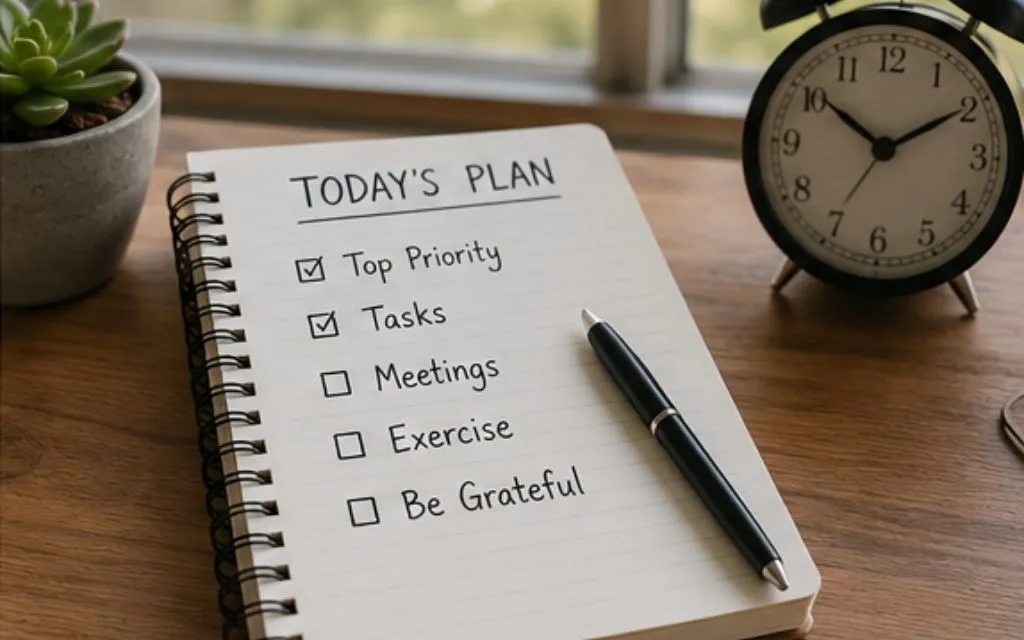
Use this simple formula:
Goal → Time → Essential Habits → Order → Backup Plan
For example:
Goal: Start work focused
Time: 30 minutes
Habits: Water, daylight, movement, breakfast, priorities
Order: Wake → light → movement → breakfast → planning
Backup: 10-minute version when the morning goes wrong
This creates a routine around your needs instead of someone else’s lifestyle.
15, 30, and 60-Minute Morning Routines
You do not need the same routine every day.
15-Minute Morning Routine
A short routine could look like:
- 2 minutes: Get up and drink water
- 5 minutes: Get outside or near natural light
- 5 minutes: Stretch or walk
- 3 minutes: Review your top priority
This works well when you have an early start.
30-Minute Productive Morning Routine
Try:
- 5 minutes: Wake up, bathroom, water
- 5 minutes: Natural light
- 10 minutes: Walk, stretch, or simple exercise
- 5 minutes: Breakfast
- 5 minutes: Review your schedule and priorities
Physical activity is worth including when it fits your schedule. The CDC notes that physical activity can provide immediate benefits such as improved sleep quality and reduced anxiety, while regular activity supports longer-term health.
60-Minute Healthy Morning Routine
With an hour available:
- 5 minutes: Wake up and hydrate
- 10 minutes: Natural light and fresh air
- 15 minutes: Exercise or walking
- 10 minutes: Shower and get ready
- 10 minutes: Breakfast
- 5 minutes: Planning
- 5 minutes: Quiet time, reading, journaling, or another activity you enjoy
The key is not to fill every minute.
Having five quiet minutes before work may be more useful than adding another habit to your list.
Morning Routines for Different Lifestyles
For Office Workers
Focus on reducing rushed decisions.
Wake → light → movement → breakfast → get ready → commute → work priority
Prepare clothes, lunch, and your bag the night before when possible.
For Remote Workers
The biggest challenge can be moving directly from bed to work.
Create a clear boundary.
Wake → get dressed → light/outdoor time → movement → breakfast → planning → work
Even a short walk before opening your laptop can create a stronger transition into the workday.
For Students
Keep it simple:
Wake → hygiene → breakfast → check essentials → leave
Avoid turning your morning into another study session unless it genuinely helps you.
For Parents
Forget perfection.
Your routine may need two versions:
Normal morning: Full routine
Chaotic morning: Minimum routine
That flexibility is more useful than trying to maintain an Instagram-style schedule every day.
For Night Owls
Do not force yourself into a 5 a.m. identity just because productivity content says you should.
If your schedule allows it, build a strong routine around the time you naturally function best while still getting adequate sleep.
Should You Use Your Phone in the Morning?

There is no rule that says your phone must be completely banned.
The better question is:
What happens when you pick it up?
Checking an urgent message may take 30 seconds.
Opening social media can turn into 30 minutes.
Try creating a simple phone rule:
Essential first, entertainment later.
For example, you might allow:
- Calendar
- Weather
- Maps
- Important messages
- Work-related information
But delay:
- Social media
- News scrolling
- Random videos
- Nonessential notifications
If your phone consistently pulls you away from your routine, charge it away from your bed and use a separate alarm clock.
Healthy Morning Routine Habits
Some morning habits have stronger practical support than others.
Get Natural Light
Morning light helps regulate the body’s circadian timing and supports daytime alertness. CDC guidance also recommends getting natural light earlier in the day.
You do not need a complicated routine.
Open the curtains. Sit near a bright window. Step outside. Take a short walk.
Move Your Body
You do not need a full workout.
A few minutes of walking, stretching, mobility work, or exercise can be enough to get moving.
Your full workout can happen later if that fits your schedule better.
Eat a Balanced Breakfast If You Prefer Breakfast
Breakfast does not have to be elaborate.
Choose foods that fit your preferences and schedule, such as eggs, yogurt, fruit, oats, whole grains, or another balanced option.
The goal is not to create a picture-perfect breakfast. It is to have a practical option that works for you.
Protect Your Sleep
This may be the most important part of your morning routine that actually happens the night before.
Adults generally need at least seven hours of sleep. Keeping a regular sleep and wake schedule can also support better sleep.
If your morning routine requires waking at 5 a.m. but you regularly go to bed at midnight, the problem is probably not your morning routine.
It is your schedule.
How to Make Your Morning Routine Stick

Do not expect your new routine to feel automatic after a week.
Habit formation varies significantly between people and behaviors. A 2024 systematic review reported median habit-formation times of roughly 59 to 66 days in the studies that reported such measures, with individual results ranging from 4 to 335 days.
So instead of asking:
“Why haven’t I made this a habit in 21 days?”
Ask:
“How can I make repeating this behavior easier?”
Use these strategies:
Keep the Starting Point Consistent
Wake up, drink water, then go outside.
The exact cue matters less than having a repeatable sequence.
Start Smaller Than You Think
Want to exercise every morning?
Start with five minutes.
Want to read?
Start with two pages.
Want to journal?
Write three sentences.
A routine that you actually repeat is more useful than an ambitious routine that lasts four days.
Track Repetition, Not Perfection
Missing one morning does not destroy your progress.
Look at the bigger pattern across several weeks.
Review Your Routine
After one or two weeks, ask:
- Which habit is genuinely useful?
- Which one feels like a chore?
- Where do I lose time?
- What can I prepare the night before?
- What should I remove?
Your routine is allowed to change.
The Minimum Viable Morning
This is the most important backup system in the entire routine.
Your Minimum Viable Morning is the shortest version of your routine that still helps you start the day properly.
For example:
Wake → water → daylight → get ready → leave
That’s it.
On a normal day, you might exercise, eat breakfast, journal, and plan your work.
On a terrible morning, you use the minimum version.
This prevents one bad morning from turning into a bad week.
7-Day Morning Routine Reset
If your current mornings feel chaotic, try this simple reset.
| Day | Focus |
| Day 1 | Choose your wake-up time |
| Day 2 | Remove one morning distraction |
| Day 3 | Add natural light |
| Day 4 | Add 5 to 10 minutes of movement |
| Day 5 | Prepare something the night before |
| Day 6 | Create your 10-minute backup routine |
| Day 7 | Review what worked and remove what didn’t |
Do not add ten new habits in one week.
Build the foundation first.
Morning Routine Checklist
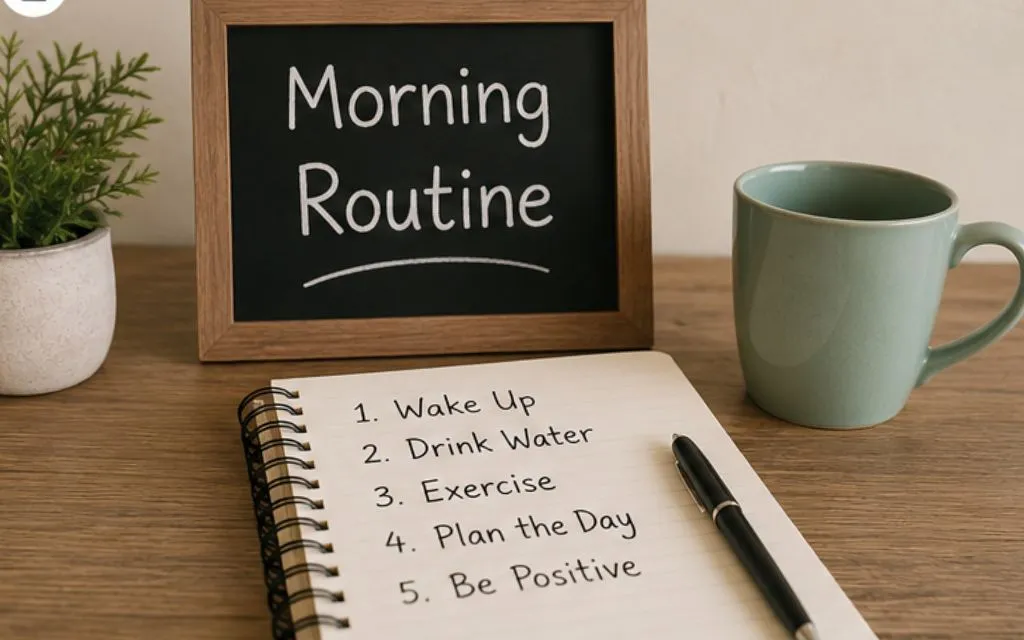
Use this as your simple morning routine list:
- Wake up at a realistic time
- Get enough sleep
- Drink water
- Get natural light
- Move your body
- Eat if breakfast works for you
- Avoid unnecessary phone scrolling
- Review your top priority
- Leave enough time for unexpected delays
- Use your Minimum Viable Morning when necessary
Frequently Asked Questions
What is the best way to start your day?
Start with enough sleep, a consistent wake-up time, natural light, some movement, and a clear idea of what matters that day. You do not need a complicated routine.
How do I build a good morning routine?
Choose one goal, decide how much time you actually have, select three to five useful habits, put them into a repeatable order, and create a shorter backup version.
What should be on a productive morning routine list?
A productive morning routine can include getting ready, natural light, movement, breakfast, planning, and reviewing your most important task. Choose only the habits that genuinely help you.
How long should a morning routine be?
There is no perfect length. A useful routine could take 10 minutes or an hour. The right length depends on your schedule and priorities.
Is waking up at 5 a.m. better?
Not necessarily. Waking earlier only helps if you can maintain it without regularly sacrificing the sleep you need.
How long does it take to build a morning routine?
It varies. Research does not support a universal 21-day rule. A recent systematic review found substantial variation in habit formation, with reported median times around 59 to 66 days in some studies.
What if I miss my morning routine?
Continue the next day. Do not try to compensate by creating an even longer routine. Your backup routine exists for exactly this reason.
Final Thoughts
The best morning routine is not the most impressive one.
It is the one you can repeat when life is normal, when work gets busy, when your children wake up early, when your commute changes, and when you simply do not feel motivated.
Start with enough sleep. Choose a clear goal. Keep the habits simple. Prepare the night before. Give yourself a short backup routine.
Most importantly, build a morning that supports your actual life instead of trying to copy someone else’s.