

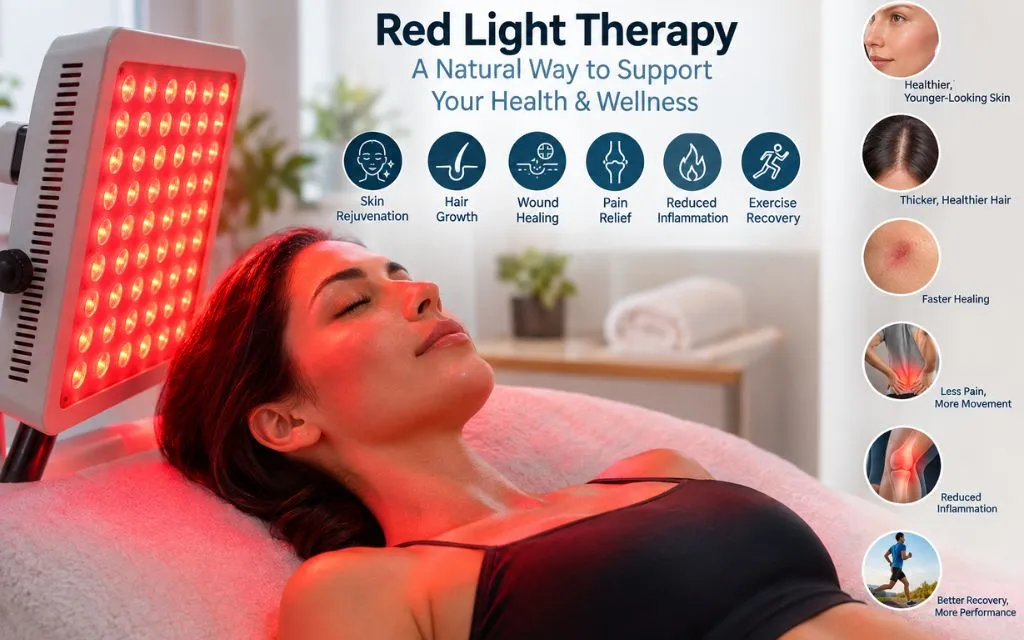

Red light therapy is a non-invasive treatment that uses red or near-infrared light to influence cellular activity. It is also called photobiomodulation, or PBM, and has been studied for skin rejuvenation, hair loss, wound healing, pain, inflammation, and exercise recovery.
- What Is Red Light Therapy?
- What Are the Main Red Light Therapy Benefits?
- Red Light Therapy Benefits for Skin
- Red Light Therapy vs Near-Infrared Light
- How Long Does Red Light Therapy Take to Work?
- How Often Should Red Light Therapy Be Used?
- Is Red Light Therapy Safe?
- Who Should Be Careful With Red Light Therapy?
- How to Choose a Red Light Therapy Device
- Common Red Light Therapy Mistakes
- At-Home Red Light Therapy vs Professional Treatment
- Key Takeaway
- Frequently Asked Questions
- Conclusion
Research suggests that red light therapy may provide benefits for certain conditions, but the strength of evidence varies by use. It is not a cure-all treatment, and results depend on the wavelength, dose, treatment schedule, and condition being treated. Recent expert consensus supports photobiomodulation as a generally safe treatment for adults when used appropriately.
What Is Red Light Therapy?
Red light therapy uses specific wavelengths of visible red light and, in some treatments, near-infrared light. The therapy is also known as low-level light therapy, low-level laser therapy, or photobiomodulation.
Unlike ultraviolet light, red and near-infrared light are not used to produce a tanning effect. Instead, photobiomodulation aims to influence biological processes within cells.
Red light therapy can be delivered through LED panels, masks, handheld devices, laser systems, or other specialized equipment. Home devices usually provide lower power than professional systems.
How Does Red Light Therapy Work?
Photobiomodulation works by exposing tissue to selected wavelengths of light. The light can interact with cellular components and influence signaling pathways related to energy production, inflammation, tissue repair, and other biological processes.
Researchers commonly study the interaction between light and cellular chromophores, including processes linked with mitochondrial activity.
The exact response depends on several factors, including wavelength, energy delivered, treatment duration, treatment frequency, and the tissue being treated.
What Are the Main Red Light Therapy Benefits?
The potential benefits of red light therapy vary considerably by condition. Some applications have stronger clinical evidence than others.
1. May Support Skin Rejuvenation
One of the most popular uses of red light therapy is cosmetic skin care.
Research has reported potential improvements in the appearance of fine lines, wrinkles, rough skin, redness, discoloration, and skin firmness. The American Academy of Dermatology notes that some studies have found subtle to noticeable improvements from red-light LED devices used for signs of skin aging.
Red light therapy is generally considered a non-invasive option because it does not remove the outer layer of the skin.
However, results can vary between devices and users. Home devices also differ in their wavelength, power, treatment time, and design.
2. May Help With Acne
Red light is sometimes used as part of LED treatment for acne.
A recent systematic review and meta-analysis evaluated six randomized clinical trials involving at-home or portable red and blue LED devices. The studies used red light in the range of 630 to 670 nanometers and found significant reductions in inflammatory and non-inflammatory acne lesions compared with control groups. The review also reported generally favorable adverse-effect profiles.
Blue light is often combined with red light in acne devices. The two wavelengths have different biological targets, so combination devices may be used for broader acne-focused treatment.
3. May Support Hair Growth
Red and near-infrared light have also been studied for hair loss, particularly androgenetic alopecia.
The American Academy of Dermatology notes that some FDA-cleared red-light devices, including combs, caps, and helmets, are available for hair regrowth. Research suggests that these devices may stimulate hair follicles and reduce hair loss in some people, although they do not regrow a full head of hair.
An umbrella review of randomized clinical-trial meta-analyses found moderate-certainty evidence for increased hair density in androgenetic alopecia.
Hair loss has many possible causes, so identifying the underlying cause remains important.
4. May Support Wound Healing
Photobiomodulation has been studied as a supportive approach for tissue repair and wound healing.
An evidence-based clinical consensus published in 2025 identified wound ulcers among the conditions for which photobiomodulation has clinical evidence. The same consensus described PBM as a safe treatment modality for adults when appropriately applied.
However, red light should not replace standard wound care. Open, infected, or serious wounds require appropriate medical evaluation.
5. May Help With Certain Types of Pain
Pain management is another area of research.
Photobiomodulation has been investigated for several pain-related conditions. A large umbrella review covering 15 meta-analyses and more than 9,000 participants found significant effects across several health outcomes, although certainty varied from very low to moderate depending on the condition.
The evidence is therefore promising for selected conditions rather than proof that red light therapy treats all types of pain.
6. May Support Exercise Recovery
Athletes and active people sometimes use photobiomodulation before or after exercise.
A 2025 systematic review examined whole-body photobiomodulation for exercise performance and recovery. The researchers evaluated studies using red and near-infrared lasers or LEDs and highlighted the need for further research to clarify its effects.
This means red light therapy may have a role in recovery, but the evidence should not be interpreted as a guarantee of improved athletic performance.
7. May Help Reduce Inflammation
Inflammation is another biological process studied in photobiomodulation research.
Researchers have investigated how red and near-infrared light may influence inflammatory pathways and cellular signaling. Reviews describe possible effects on inflammation, tissue repair, and cellular activity.
However, inflammation is involved in many different diseases. A general claim that red light therapy “reduces inflammation” should therefore be interpreted carefully.
Red Light Therapy Benefits for Skin

Red light therapy has become particularly popular in facial skincare.
Fine Lines and Wrinkles
Some studies report improvements in the appearance of fine lines and wrinkles following repeated treatments.
The American Academy of Dermatology reports that studies have found improvements in several signs of skin aging, including fine lines, wrinkles, rough-feeling skin, discoloration, and loose skin.
Skin Texture
Regular treatment may help improve the appearance of rough or uneven skin in some users.
The exact outcome depends on the device and treatment protocol. Research studies do not all use the same wavelengths or treatment schedules, making direct comparisons difficult.
Redness and Discoloration
Some studies have reported improvements in redness and dark spots. However, pigmentation can be complex, and visible light can affect pigmentation differently depending on the individual.
People with darker skin tones should be especially careful and consider speaking with a dermatologist before using an at-home red-light device. The American Academy of Dermatology notes that visible light can increase hyperpigmentation in some people with darker skin tones.
Red Light Therapy vs Near-Infrared Light
Red light and near-infrared light are related but not identical.
Red light generally refers to visible wavelengths around the red portion of the spectrum. Near-infrared light has longer wavelengths and cannot be seen by the human eye.
Photobiomodulation devices may use red light, near-infrared light, or both.
The appropriate wavelength depends on the treatment goal and the tissue being targeted. A device with more wavelengths is not automatically more effective.
How Long Does Red Light Therapy Take to Work?
Red light therapy is usually not an instant treatment.
Results depend on the condition, device, treatment schedule, and individual response. Home users typically need repeated sessions over time.
The American Academy of Dermatology states that people using red-light devices at home need regular treatment and that the time required varies between devices. It also notes that not everyone sees results.
For this reason, users should follow the manufacturer’s treatment schedule rather than increasing exposure in an attempt to speed up results.
How Often Should Red Light Therapy Be Used?
There is no single schedule that works for every red-light device.
Treatment frequency depends on the wavelength, irradiance, treatment area, device design, and intended purpose.
Some devices are designed for several sessions per week, while others may have different recommendations.
The safest approach is to follow the specific instructions provided with the device.
Is Red Light Therapy Safe?
Current evidence suggests that red light therapy is generally well tolerated when appropriately used.
A 2025 international expert consensus found photobiomodulation to be a safe treatment modality for adults and reported that red-light PBM does not induce DNA damage.
The American Academy of Dermatology also states that short-term use appears safe and that the most common side effects are mild, such as temporary discomfort or skin irritation.
Long-term effects are less well understood, particularly for consumer devices used over extended periods.
Does Red Light Therapy Cause Cancer?
Current evidence does not show that red light therapy causes skin cancer in the way ultraviolet radiation can.
A systematic review examining the oncologic safety of photobiomodulation for aesthetic skin rejuvenation found no clinical evidence linking PBM with significant adverse cancer-related events.
However, people with a history of cancer or a suspicious skin lesion should discuss light-based treatments with an appropriate healthcare professional rather than making assumptions about safety.
Who Should Be Careful With Red Light Therapy?
Certain people may need additional medical guidance before using red light therapy.
Extra caution may be appropriate for people with:
- Photosensitive skin conditions
- Medications that increase light sensitivity
- Certain eye conditions
- Active skin disease
- Unexplained skin lesions
- Recent cosmetic or dermatological procedures
The American Academy of Dermatology recommends consulting a board-certified dermatologist before using an at-home red-light device, especially when a person has a condition that may worsen with light or takes photosensitizing medication.
How to Choose a Red Light Therapy Device
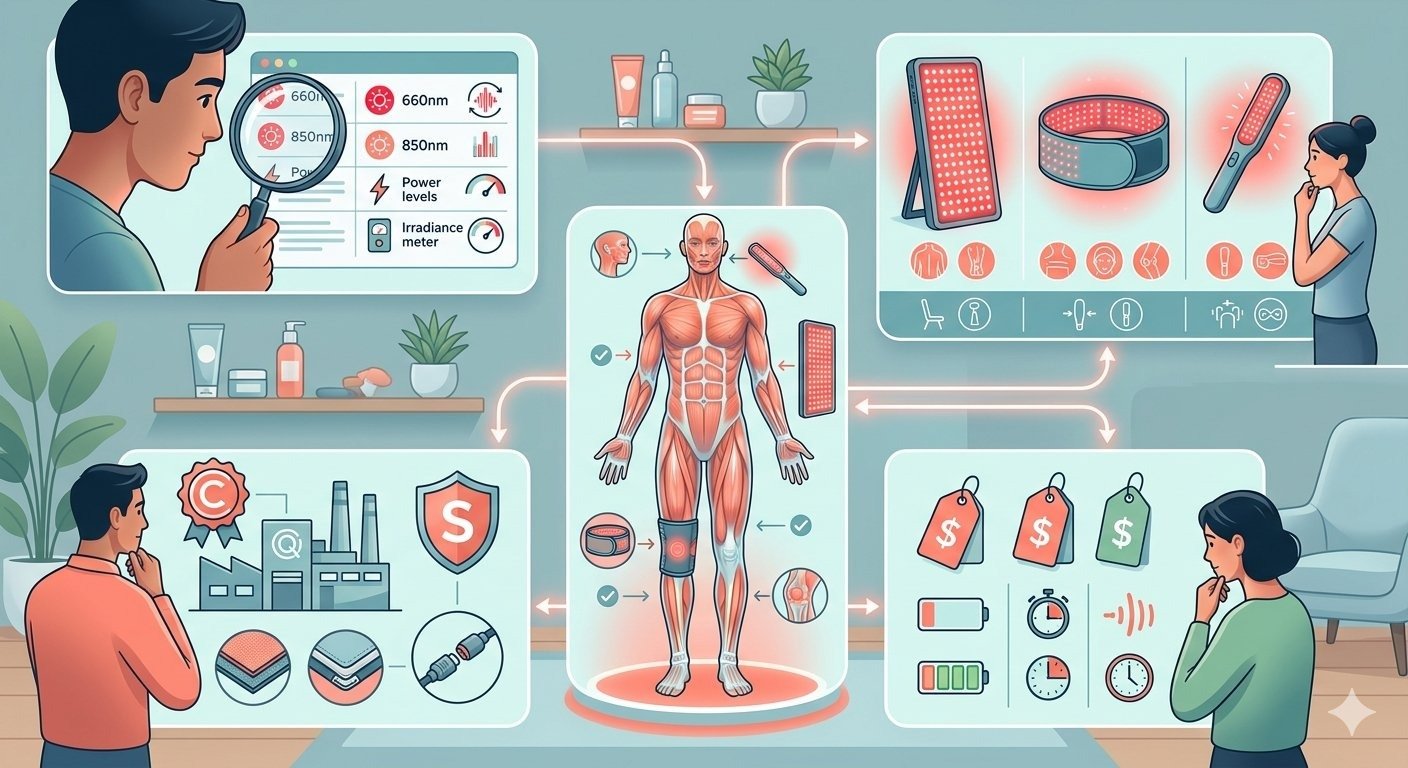
Check the Intended Use
Choose a device designed for the specific concern being treated.
A device intended for hair loss may not have the same design or treatment parameters as one intended for facial skin.
Check the Wavelength
Look for clear wavelength information rather than relying only on general terms such as “medical-grade light.”
Different wavelengths interact with tissue differently.
Look for Appropriate Regulatory Clearance
In the United States, the FDA may clear certain devices for specific uses.
The term FDA cleared has a specific regulatory meaning. The American Academy of Dermatology explains that “FDA approved” or “FDA certified” are not the appropriate terms for describing these medical devices.
Follow the Instructions
Do not assume that a longer session will provide better results.
Treatment time, distance, frequency, and eye protection requirements can vary between devices.
Common Red Light Therapy Mistakes
Using It Too Often
More exposure does not necessarily mean better results. Overuse can increase irritation or discomfort.
Ignoring Eye Protection
Some devices require protective eyewear. Users should follow the device instructions and use the recommended protection.
Expecting Immediate Results
Photobiomodulation usually requires repeated treatments. Patience and consistency matter.
Believing Every Marketing Claim
Red light therapy has legitimate areas of research, but not every claim made by a device manufacturer has the same level of clinical support.
Replacing Medical Treatment
Red light therapy can sometimes be used as a complementary treatment, but it should not automatically replace established medical care.
At-Home Red Light Therapy vs Professional Treatment
Professional red light therapy may use different equipment and treatment parameters from consumer devices.
Dermatologists may also combine red light with other treatments based on the patient’s specific condition. The American Academy of Dermatology notes that professional devices can be more powerful than at-home red-light products.
At-home devices offer convenience and can support maintenance routines. Professional treatment allows a trained provider to assess the condition and select an appropriate treatment approach.
Key Takeaway
Red light therapy, also known as photobiomodulation, has several potential applications.
Research supports selected uses for skin rejuvenation, acne, hair loss, wound healing, pain, and other conditions. However, the strength of evidence differs substantially between applications. Some outcomes have moderate evidence, while others still require larger and better-designed studies.
For home use, choosing an appropriate device, following its instructions, using eye protection when required, and maintaining realistic expectations are essential.
Frequently Asked Questions
What are the main red light therapy benefits?
Potential benefits include improvements in selected signs of skin aging, support for some acne treatments, hair growth in certain types of hair loss, wound healing support, and possible benefits for selected pain and recovery conditions.
Does red light therapy really work?
Research suggests that photobiomodulation can be effective for certain conditions, but results vary. The evidence is stronger for some applications than others.
Can red light therapy improve skin?
Yes. Studies have reported improvements in the appearance of fine lines, wrinkles, rough skin, redness, discoloration, and loose skin in some users.
Does red light therapy help hair growth?
Certain red-light devices may help people with androgenetic alopecia. Research has found evidence of increased hair density, but results vary and red light does not regrow a full head of hair.
How long does red light therapy take to work?
Results generally require repeated treatments. The timeline depends on the condition, device, treatment schedule, and individual response.
Can red light therapy help acne?
At-home red and blue LED devices have shown reductions in inflammatory and non-inflammatory acne lesions in randomized clinical trials.
Is red light therapy safe every day?
Not necessarily. The correct frequency depends on the specific device and treatment goal. Users should follow the manufacturer’s instructions rather than assuming daily treatment is appropriate.
Does red light therapy damage skin?
Short-term research suggests that red light therapy is generally well tolerated. Mild irritation or temporary discomfort can occur. Incorrect use may increase the risk of adverse effects.
Can red light therapy replace skincare products?
No. Red light therapy can complement a skincare routine, but it does not replace basics such as cleansing, moisturizing, and sun protection.
Is red light therapy the same as infrared therapy?
Not exactly. Red light is visible, while near-infrared light is outside the visible spectrum. Both can be used in photobiomodulation devices.
Conclusion
Red light therapy has developed into a widely studied form of photobiomodulation. Its potential applications range from skin rejuvenation and acne care to hair loss, wound healing, pain management, and exercise recovery.
The evidence is encouraging for several applications, but it is not equally strong across every claimed benefit. Research quality, device specifications, wavelength, treatment dose, and individual response all matter.
For anyone considering red light therapy at home, the most practical approach is to identify the specific goal, choose an appropriate device, follow the instructions carefully, and maintain realistic expectations.